About Bob · Independent for Mayor
He signs the paychecks. He pays the water bill. He waits on the permit.
Rockford isn't a place Bob discovered when he decided to run for mayor. It's home. He grew up here, raised his family here, coached here, led a union here and bought a business here.
He's running because Rockford's next chapter should reach the blocks where people actually live — and because City Hall should be as accountable to residents as any decent business is to its customers.
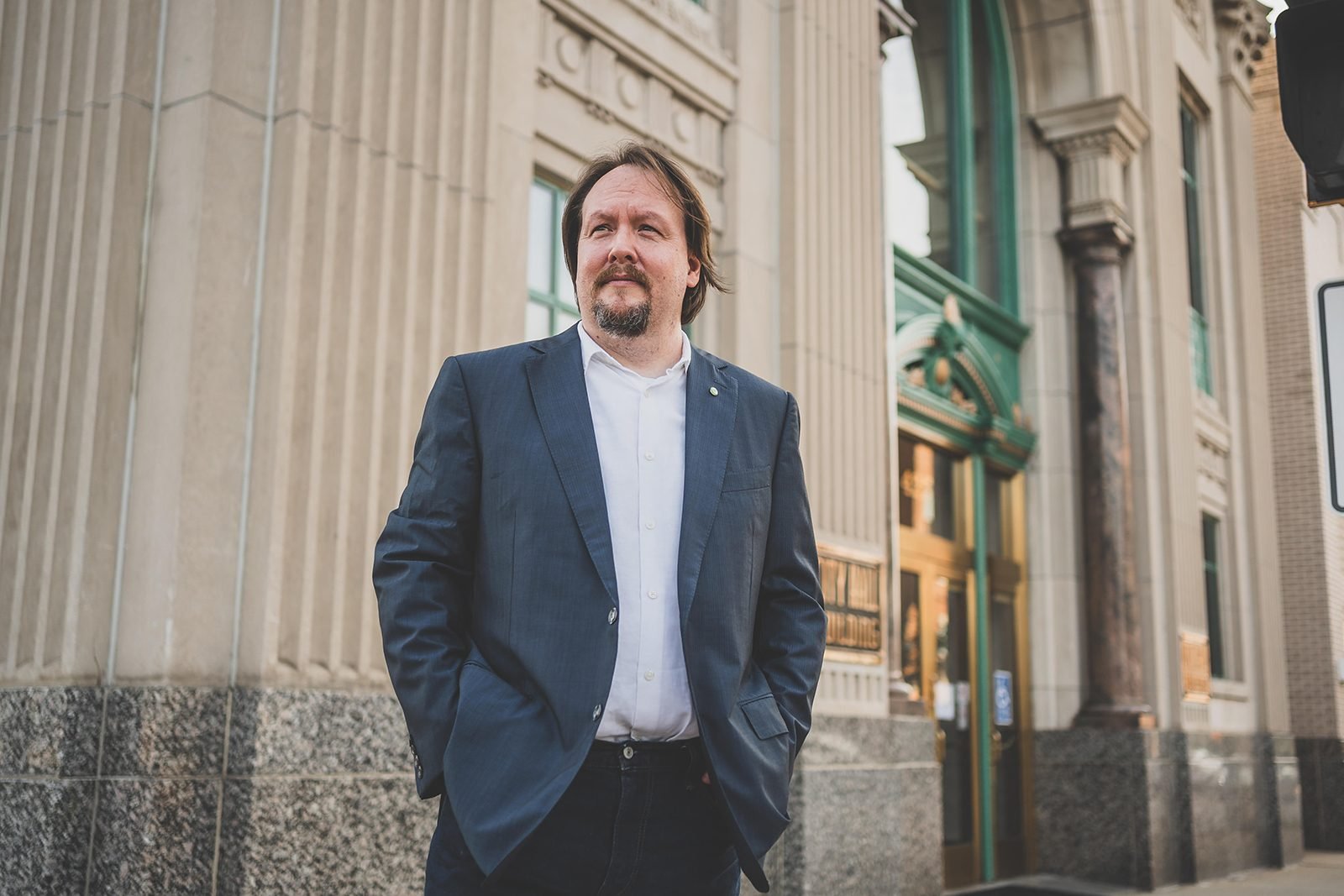
Why now
What changed downtown, and what didn't change anywhere else
For years, Bob has watched Rockford prove that it can change when people decide something matters enough to stay focused on it. Downtown is different because people made a plan, stuck with it, and kept showing up. Bob has seen that progress not from a conference room, but as someone who has spent his life here — running a business, serving customers, paying taxes, raising a family, and talking every day with people who call Rockford home.
What bothers him is that too many people haven't felt that same progress where they live. They still see streets and sidewalks that wait too long, bills that keep climbing, projects that take too long to get an answer, and neighborhoods wondering when their turn is coming. Bob isn't running because he thinks Rockford is failing. He's running because Rockford has already shown what it can accomplish. He believes the next mayor's job is to take that same focus, accountability, and persistence beyond downtown and put it to work across the entire city.
That's why now. Bob has spent his career solving problems where excuses don't pay the bills and promises don't count unless you deliver. He knows a mayor can't fix everything, and he won't pretend otherwise. But on the things City Hall does control, he believes Rockford should expect clear priorities, measurable results, and somebody willing to be held accountable for both.
Bob isn't running to start over. He's running because the work Rockford has already begun shouldn't stop at the edge of downtown.
Downtown proved it can be done.
Now let's
do it on your block.
Rockford is worth the effort
Ask Bob what is actually wrong in Rockford and he will get to a version of this before he gets to a policy: too many people here have been taught to think of this as a city less than. Somewhere smaller than it should be. Somewhere you leave.
He doesn't believe it, and he has spent his own money betting against it — on a First Street block when the storefronts on either side were papered over, and on a floor upstairs that shows the work of people who live here.
That belief has practical consequences. It is why he thinks filling the empty windows downtown matters beyond the rent, why he wants more citywide events and public spaces where Rockford's neighborhoods and cultures end up in the same room, and why he won't run a campaign built on running the city down. People who experience their city together are more likely to invest in it. That is not a slogan; it is roughly the whole theory of the campaign.
Rockford, all his life
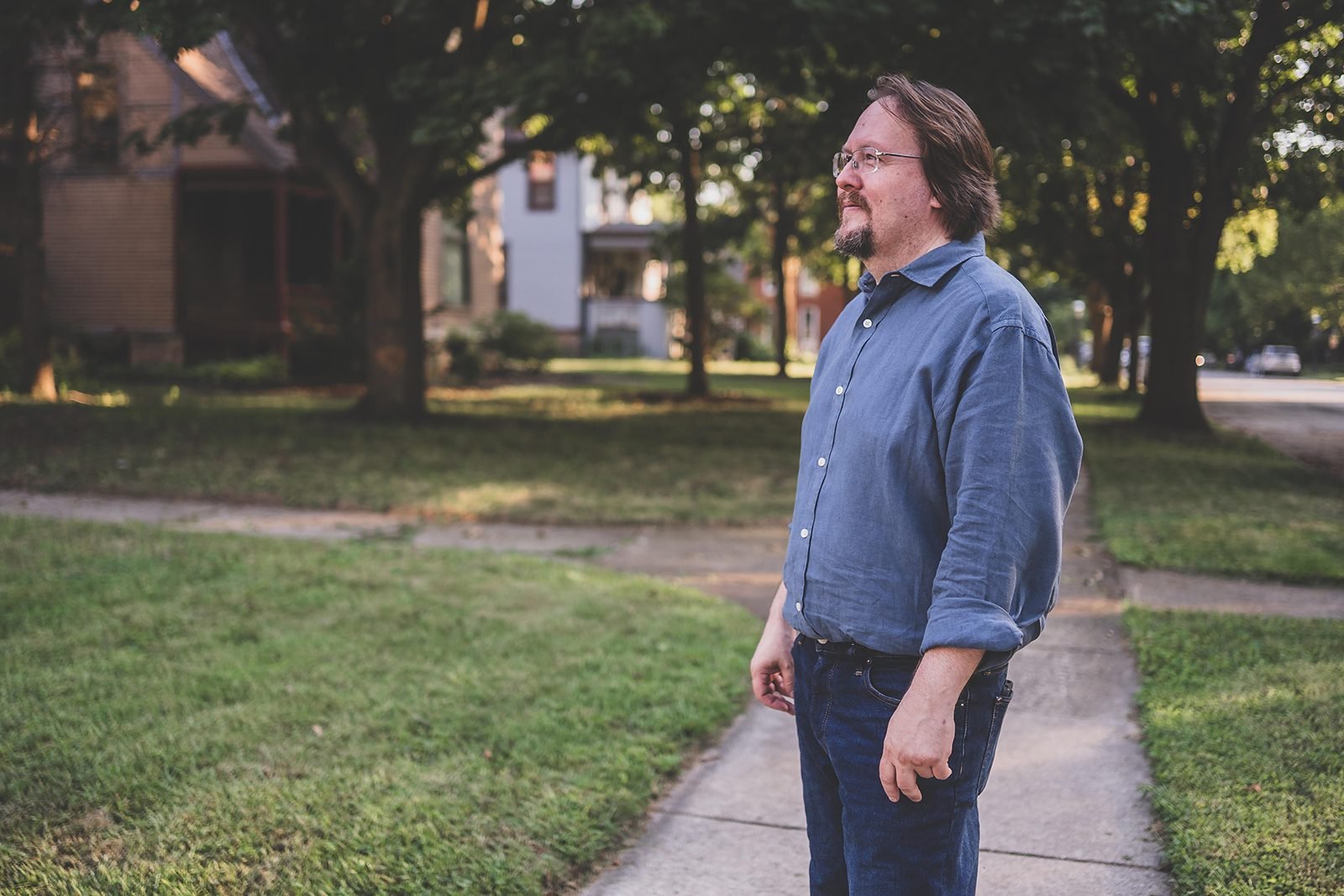
Bob Blosser was born in Rockford. He went to school here, went to work here, married here, raised his children here, and went into business here.
One of them is Bennie's Cleaners at 126 N 1st St, in business since 1946 — first from the second floor of the Faust Hotel, now from First Street. Bob and his wife Savon bought it in 2019, and he has met a payroll there every week since. He knows what it costs to employ people in this city: the taxes, the water bill, the permit sitting on somebody's desk.
A dry cleaner is an unusual listening post. People come in twice a week for years. You learn who just got a job and who just lost one, whose kid is graduating, which street flooded again, who is trying to sell a house and can't. Bob has been standing on the other end of that conversation for years, and a good deal of what is on this website started as something somebody said across the counter.
The rest of it, in the order he'd tell you:
- President of UAW Local 3826.
- Coach of youth soccer and basketball — enough seasons to have run practice in a Rockford February more than once.
- Treasurer of two local nonprofits.
- Host of arts and culture events downtown — including the gallery on the second floor above the shop.
He is running as an Independent — the harder way onto a ballot, and the only way he wanted. Neighbors put him on it. April is the part that's up to you.
Bennie's Cleaners, 126 N 1st St
Bennie's has been cleaning Rockford's clothes since 1946. Bennie Callea ran it, then Larry Sheets from 1986; Bob and Savon became its third owners in 2019. They bought it for one reason: an older Rockford business reaches the point where the owner is ready to retire and nobody has a plan, and somebody has to keep the doors open.
It had already stayed open through the years when downtown was empty and half the block sat dark. That is the thing they were buying: a business somebody else had kept alive through the worst of it.
Keeping a small business alive in a dying downtown is not sentimental. It's margins. Equipment that breaks on a Saturday. Hiring people other employers passed over. Water bills. Deciding whether this is the year for the roof or the year for the press.
Bob doesn't manage Bennie's from a distance. He deals with the customers, the employees, the vendors, the equipment, the utility bill and the payroll. When something goes wrong there is no other department to send it to. His name is on the door.
The parts that matter
What a business owner learns about City Hall
Bob knows City Hall from the side most residents and small businesses know it: the other side of the counter.
Most people meet city government twice: when something breaks, and when a bill arrives. A business owner meets it constantly, always with the clock running.
- Permits. Not whether the answer is yes. How many weeks it takes to get one, and whether anyone will tell you where the file is sitting.
- Water. A rate increase isn't a line item when water is a raw material. You feel it the month it lands.
- Inspections. Which rules exist to keep people safe, which exist because nobody has looked at them in fifty years, and what it costs you not to know the difference.
- Why an expansion goes to Beloit or Loves Park. Rarely one big reason. A permit timeline, a utility answer, and somebody returning a phone call.
None of that is ideology. It's operations — and operations is most of what a mayor's office does. Here is the full list of what the job controls and what it doesn't.
The second floor
Above the shop is a floor that could sit empty. Instead it shows and sells the work of Rockford artists — roughly $90,000 worth a year.
Storefront rent downtown is out of reach for almost every artist who lives here. Using space the business already has means those artists get a room, the buyer gets something made in Rockford, and the money stays with the person who made it. It costs the business very little. That's the point: most of what a city needs is space somebody already has, used on purpose.
Why Independent
Bob is not running away from a party. He is running toward a job that has no partisan version of itself. Potholes do not have a caucus position. Neither do water mains, lead service lines, or how long a permit sits on a desk.
An Independent has no party committee to satisfy and no leadership structure in Springfield to answer to. In Rockford that is not a novelty — Morrissey won three terms here as an Independent, from 2005 to 2017.
Has he run a city before?
No — and here is the deal he's offering instead. Running a business doesn't make somebody a mayor. What it does is teach you what City Hall looks like from the side most residents see it from: permits that have to arrive on time, bills that have to be paid, employees depending on a paycheck, and customers expecting an answer when something goes wrong. Bob has spent years living with the consequences of what mayors and councils decide.
And this race is for two years, not four. It fills the balance of an unexpired term: sworn in May 3, 2027, back in front of voters on May 7, 2029. Nobody is being asked to hand a first-time candidate four years. They're being asked for twenty-four months, with a public report on Day 91 and a record to judge at the end of it. Two years is short enough that the record, not the promises, decides it. More on why this seat, and why now.
So the useful question isn't whether Bob has done it before. It's whether he'll be checkable from day one. Two pages answer that with dates instead of adjectives:
- The first 90 days — ten commitments, numbered and dated, starting May 3, 2027. Hold him to them on Day 91.
- Where I stand — plain answers to the questions Bob gets asked most, including the ones without a comfortable answer.